Your Cart

Your cart is empty.
← Back to Blog

Low and Slow:
How We Dry Our Cordyceps

By Chris, Carolina Cordys April 2026 Farm Process
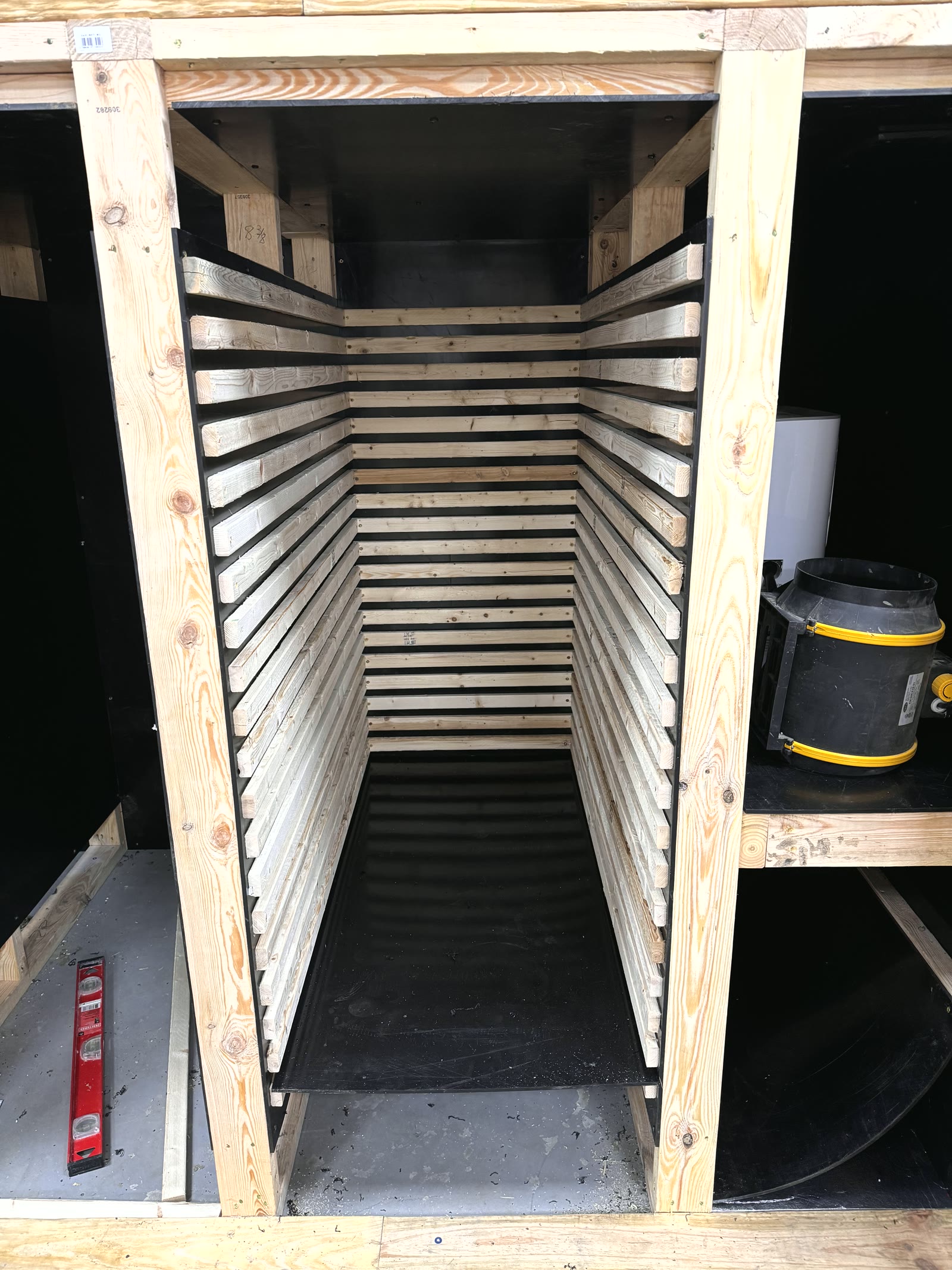
Interior of the custom-built Carolina Cordys dryer — slatted shelves, slow airflow, low heat

Drying is one of the most important, and often overlooked, aspects of producing many crops. My guiding principle is low heat — keep the temperature controlled, and don't let it get ahead of the process. That's not a rule I started with. It's the conclusion I kept arriving at through testing.

Most commercial dryers can get extremely hot, very fast, and move air extremely quickly. These were not the attributes I was looking for in a dryer. Well, I like to build stuff, and I had a daydream about a really cool design. So I built this — and I've kept refining it.

It moves air at a controlled rate through the crop. Temperature builds gradually — the discipline is in holding it low throughout. As it rises, the humidity in the chamber drops. The endpoint is consistent: predictable moisture, full compound profile intact. I've improved how we get there over time, but the underlying principle hasn't changed.

Low heat. Disciplined process.

Temperature controlled throughout. Consistent results, batch after batch.
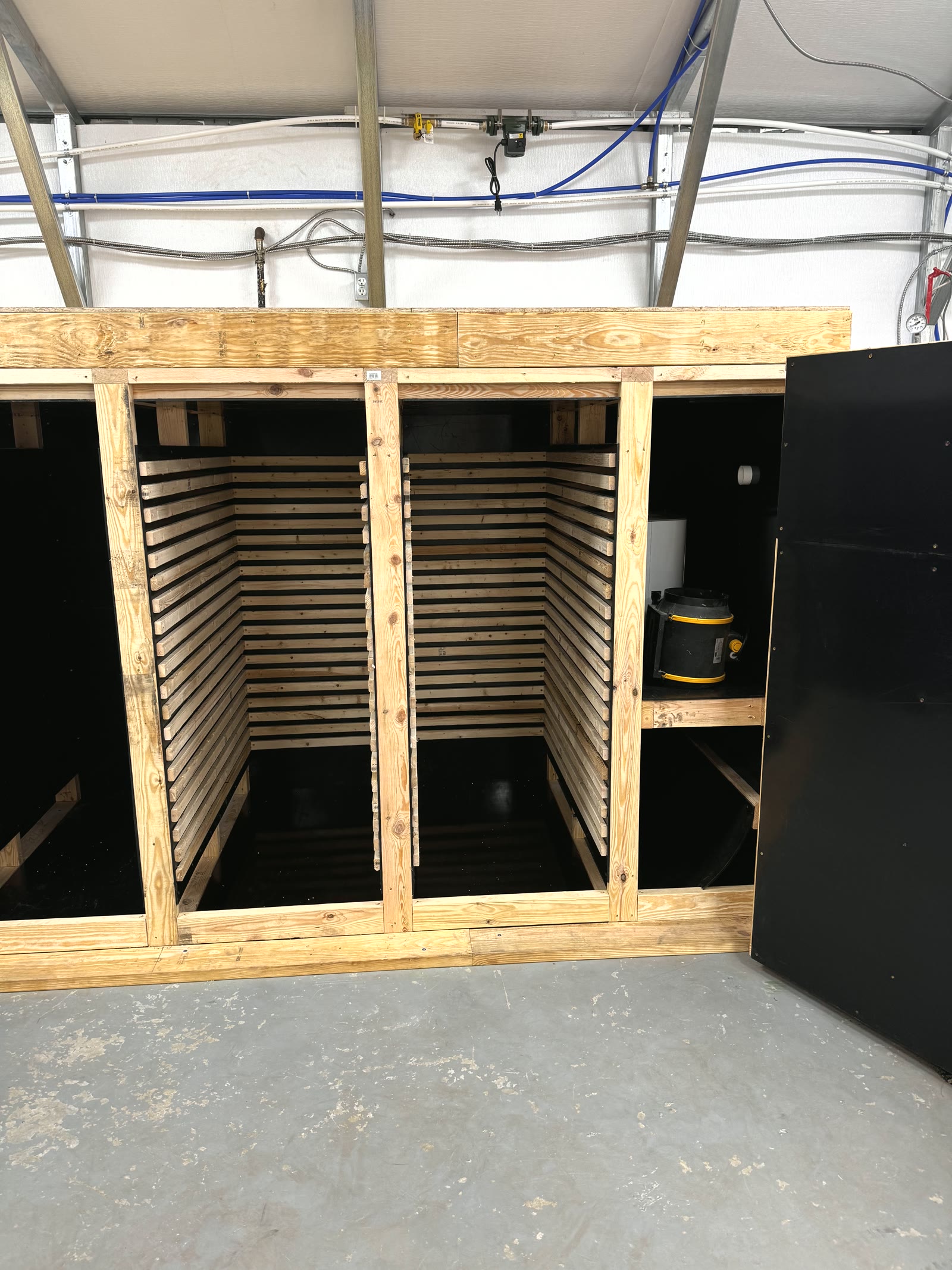
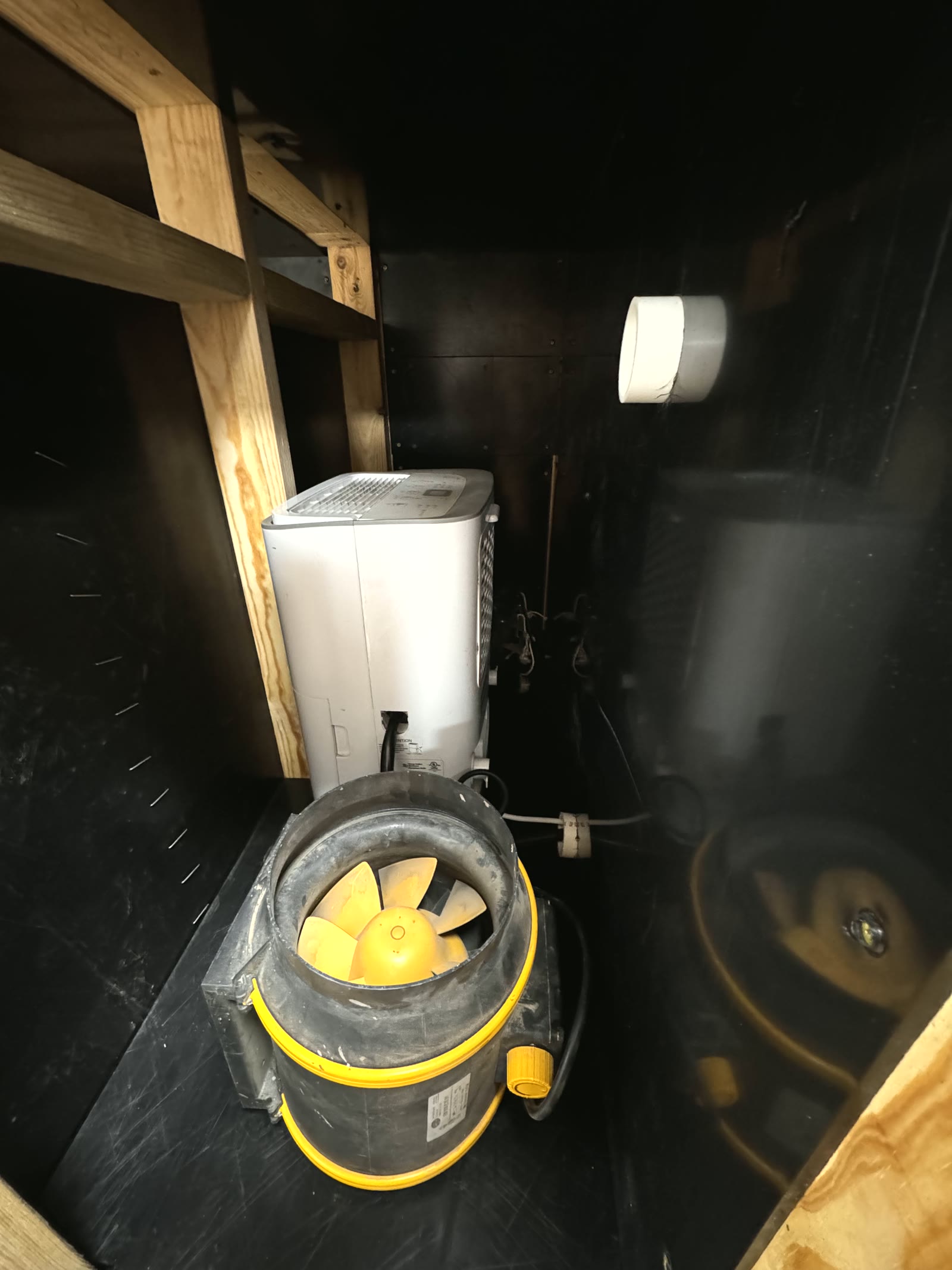
Carolina Cordys custom dryer exterior — four chambers, handbuilt from scratch on the North Carolina farm Fan and heater unit inside the Carolina Cordys dryer — slow airflow, controlled temperature rise

What this actually preserves

Going low and slow isn't just a preference. Heat is the enemy of several compounds that researchers and practitioners actively look for in quality cordyceps. Rushing the process, or running too hot, degrades what makes the ingredient worth buying in the first place.

Cordycepin and adenosine

Two of the most studied bioactive compounds in cordyceps militaris. Both are heat-sensitive nucleosides — they break down under high heat. Low and slow drying keeps them intact through the full process.

Beta-glucans and polysaccharides

The immune-supporting polysaccharide compounds found naturally in the mushroom. High heat disrupts these structures. Slow drying maintains them.

Cordyxanthins

The carotenoid-like pigments responsible for the distinctive amber-orange color of cordyceps militaris. They are sensitive to both heat and light, and serve as natural antioxidants in the mushroom. The color you see in every bag we ship is a direct indicator of how carefully it was dried.

Flavor and aroma compounds

The earthy, slightly nutty character of fresh cordyceps comes from volatile compounds that evaporate under high heat. Slow drying keeps them in the product — which is why ours smells and tastes like what it is.

Amino acids

Essential amino acids, including those that contribute to the savory and slightly sweet taste — alanine and glycine — are better preserved at lower temperatures throughout the drying process.

The following is a detailed breakdown of the specific compounds preserved by the low and slow drying method. Relevant for formulators, extract producers, and buyers verifying ingredient quality for their own products.

Bioactive Nucleosides
Cordycepin (3'-deoxyadenosine) and Adenosine

Critical nucleosides that are among the most studied compounds in cordyceps militaris research. Both degrade under high heat. These are primary target compounds for practitioners, researchers, and supplement formulators. Proper low-temperature drying is essential to maintaining them at meaningful levels in the finished ingredient.

Polysaccharides
Beta-Glucans and Supporting Polysaccharides

Immune-modulating polysaccharides are maintained by avoiding high heat throughout the drying process. High-heat drying compromises the structural integrity of these compounds and can reduce their activity in finished products.

Pigments
Cordyxanthins (Carotenoid-Like Antioxidant Pigments)

These carotenoid-like pigments give C. militaris its characteristic orange coloration and function as antioxidants in the mushroom. They are sensitive to both heat and light. Loss of color in dried cordyceps is a reliable visual indicator of heat damage during drying. The vibrant amber color of our product reflects careful temperature management throughout the full drying process.

Volatile Compounds
Aroma Compounds: 3-Octanone, 3-Octanol, 1-Octen-3-ol

These volatile compounds contribute directly to the flavor profile and aroma of the dried mushroom. They are best retained at low temperatures — high heat causes rapid evaporation. For extract producers and food formulators, retention of these compounds affects the final flavor character of the finished product.

Amino Acids
Alanine, Glycine, and Essential Amino Acids

Essential amino acids are better preserved at low temperatures throughout the drying process. Alanine and glycine specifically contribute to the savory and slightly sweet taste profile associated with high-quality dried cordyceps. Amino acid degradation under high heat results in measurable reductions in both flavor quality and overall compound integrity.

COAs available on request. Contact [email protected] for documentation, batch records, or sourcing questions.

We built the dryer ourselves because we couldn't find a commercial unit that did what we wanted. That's kind of how we approach everything here. If the right tool doesn't exist, we build it.

The result is a dried product that looks, smells, and performs like what it is: a whole fruiting body, dried right, from a farm that takes the process seriously.

Try what careful drying produces.

USDA Certified Organic. Whole fruiting body. Grown and dried in western North Carolina.

Order Now